

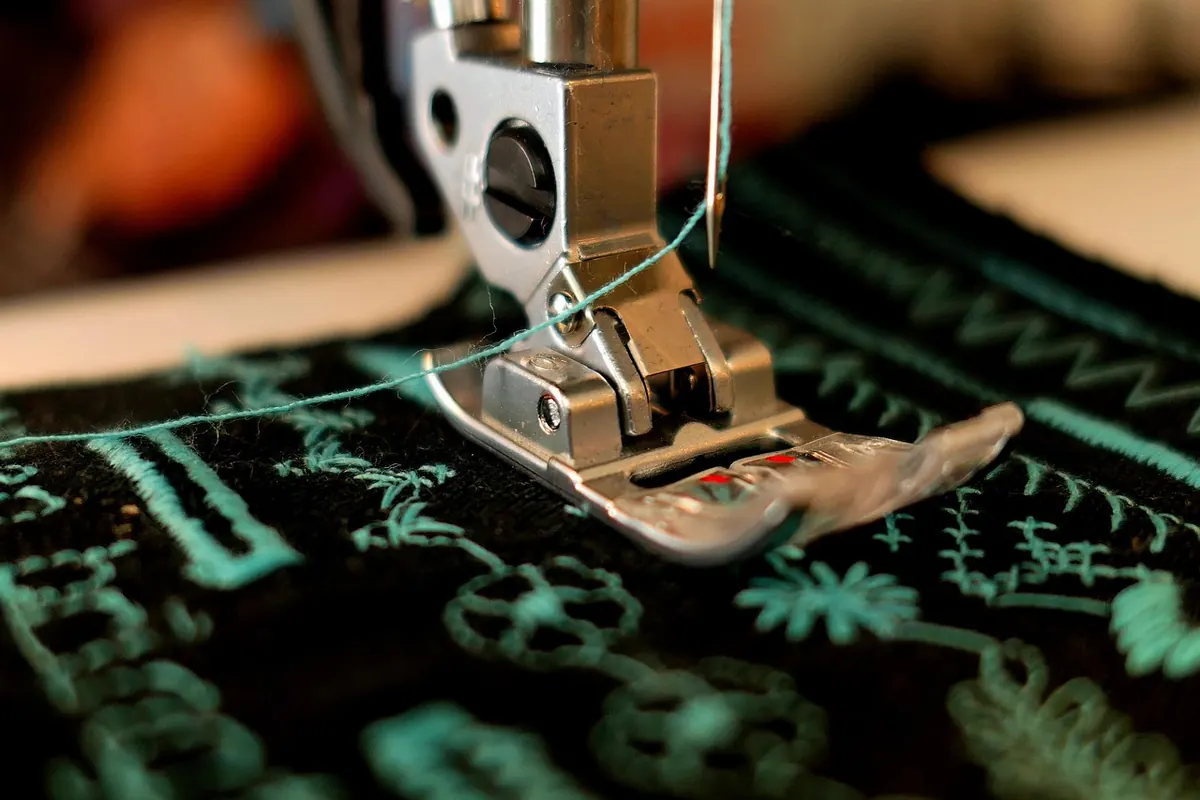
Chiffon, voile, cotton batiste, fine silk habotai — the fabrics that make a blouse feel weightless are also the ones most likely to fray, slip under the needle, and show every raw edge you leave behind. A French seam solves most of that in a single pass of the machine. It tucks the raw edges inside a narrow tube of fabric, so the inside of the garment looks as considered as the outside and there is nothing left to unravel in the wash.
The method is old and unglamorous: sew the seam twice, once with wrong sides together and once with right sides together, trapping the trimmed edges in between. Simple in theory. In practice, the details decide whether you get a crisp, almost invisible ridge or a puckered line that drags the fabric out of shape. Here is the version that behaves reliably on fine cloth.
Why lightweight fabric and French seams suit each other
On a medium-weight cotton you have options. You can overlock a seam, pink the edges, or bind them, and the fabric is sturdy enough to carry the bulk. On a sheer, every one of those finishes leaves a mark. An overlocked edge creates a thick ridge that stiffens the drape and shows through as a shadow. Pinking shears distort thin cloth and the zigzag still sheds threads. A bound seam is lovely but adds weight exactly where you want none.
A French seam adds almost nothing: two lines of fine thread and a sliver of doubled fabric, perhaps three millimetres wide once pressed. The seam line gains a little body, which helps a floppy fabric hold a shape at the shoulder or side seam, while the rest of the panel keeps its float. It also survives laundering, which matters on garments you will wash often.
One honest caveat: on the most transparent fabrics, the doubled seam reads as a faint line from the right side. Usually it looks intentional, even elegant. If it bothers you, keep the finished seam narrow, and test on a scrap held up to a window before committing to a whole panel.
Set up your machine for cloth that slips
Fine fabric punishes a careless setup. Before you thread up, gather the right small tools. None of them are expensive, and each one removes a specific frustration.
- Needle: a 60/8 or 70/10 sharp or microtex. A universal needle that is too large leaves visible holes and can snag a floaty weave.
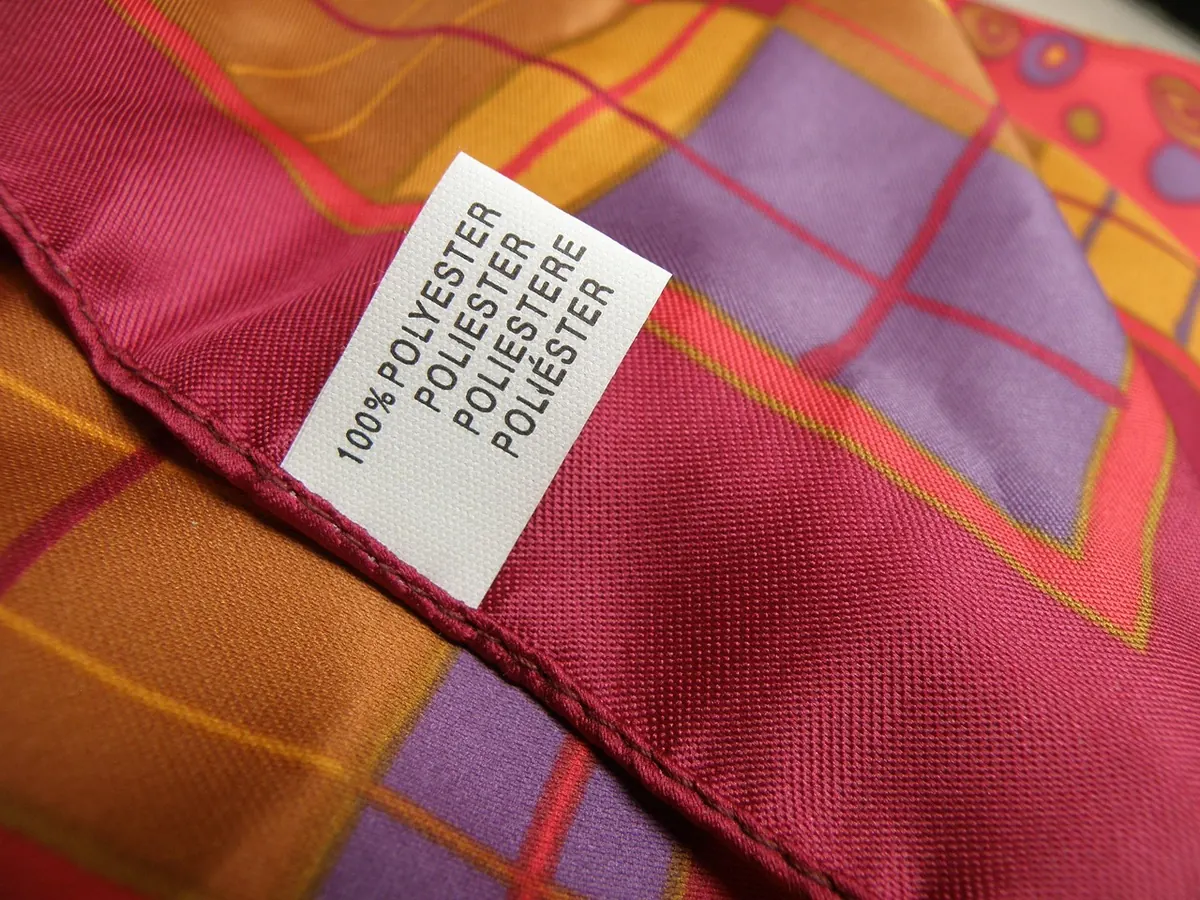
- Thread: fine cotton or silk, around 60 to 80 weight. Standard all-purpose polyester is often too thick for chiffon and looks heavy in the seam.
- Stitch length: shorten to about 1.8 to 2 mm. More stitches per inch means more fibers caught, so the trimmed edge frays far less.
- Straight-stitch plate: if your machine has one, fit it. The single small hole stops delicate fabric being pulled down around the feed dogs.
- Pins or clips: fine silk pins placed inside the seam allowance, or small clips. On chiffon, ordinary pins leave permanent holes.
- Small sharp scissors: embroidery-sized, for trimming close to the stitching without gouging the cloth.
For fabric that slides, place a strip of plain tissue paper under the seam and stitch straight through it, then tear it away. It costs a minute and prevents the wavy, chewed-up seam line that makes people give up on sheers.
Divide the seam allowance before you stitch
A French seam is really two seams sharing one allowance, so decide the split before you cut or sew. Most commercial patterns give 5/8 inch (about 1.5 cm). That divides neatly: stitch the first pass at 3/8 inch, trim the raw edge back to roughly 1/8 inch, then stitch the second pass at 1/4 inch. The maths works because the second seam always sits inside the first, swallowing the trimmed edge with a small margin to spare.
If you are drafting your own pattern or working without printed allowances, aim for at least 1/2 inch in total. A narrower budget forces you to trim so close that the second pass has no room to catch the edge securely. On very fine silk you can work smaller — 1/4 inch for the first pass, 1/4 inch for the second — for a lighter, narrower finish, but only if your stitching is accurate.
On sheer fabric, printed seam lines are hard to follow. Mark them with a fine removable marker or a hand-basted thread line, and keep your eye on the line rather than the fabric edge, which will shift.
Sewing the French seam, step by step
- Pin wrong sides together. Align the edges and notches, then pin perpendicular to the seam every 2 inches or so. Place pins inside the allowance so they never reach the stitching line.
- Stitch the first pass at 3/8 inch with your shortened stitch length. Instead of a heavy backstitch at each end, take four or five tiny stitches at almost zero length, or leave long thread tails to tie off by hand. A chunky backstitch puckers fine cloth.
- Trim the allowance to about 1/8 inch. Cut parallel to the stitching with small sharp scissors. Do not clip the threads of the seam itself — if you nick one, unpick that section and resew.
- Press the seam flat as sewn, then press it open gently. This step is not optional. A seam that is pressed open folds cleanly on the next step; a seam that is not will twist and pucker.
- Turn the work right sides together along the seam line, folding so the trimmed edges are enclosed. Run a fingernail along the fold, then press so the first stitching line sits exactly on the fold, hidden inside.
- Stitch the second pass at 1/4 inch, from the same end as before. Check as you go that the trimmed edge is fully inside the new seam — you can feel it with a fingernail.
- Press the finished seam to one side, usually towards the back, first from the wrong side and then lightly from the right side through a pressing cloth.
Before you move to the next seam, turn the piece inside out and look along the tube of fabric. No loose fibers should be visible. If one has escaped, coax it back inside with a needle rather than snipping it at the surface, which only shortens it and lets it escape again later.
Pressing, curves, and small repairs
Press at every stage
With fine fabric, the iron does half the work. Press the first seam flat, press it open, press the fold before the second pass, press the finished seam. Use a dry iron on silk and test the heat on a scrap first; steam can leave water marks on some silks. A seam roll or a tightly rolled towel helps when pressing a narrow tube such as a sleeve seam, because a flat board tends to press creases into the surrounding fabric.
Handle curves with care
Gentle curves — a neckline, a shaped side seam — work beautifully if you pivot slowly with the needle down and keep the allowance narrow. Tight curves such as a small armhole or a rounded cuff opening are a different matter: the seam cannot lie flat and will pucker. Leave those to a different finish.
Deal with ease and thread tails
If a seam includes easing, as a set-in sleeve does, a French seam fights the very gathering you need. Thread the loose tails at each end onto a hand needle and bury them inside the seam tube rather than knotting them on the surface.
When a French seam is the wrong finish
It is a specialist technique, not a universal one. Skip it on heavy or bulky cloth, where the doubled seam becomes a stiff ridge. Skip it on seams that will later be graded or pressed open, on garments likely to be let out, and on areas where a zip or pocket bag must be attached to the allowance. And on the most transparent fabrics, weigh the visible seam line against a narrow bound finish before you commit.
A seam finish should disappear into the garment. If you can see the technique more clearly than the cloth, choose something quieter.
Try it on a scrap first
Cut a square of your actual fabric — not a substitute — and sew one 10-inch French seam on it. Press it, hold it up to the light, and wash and dry it with your next load of laundry. You will learn more from that scrap than from any instruction: how much your fabric frays, how the seam behaves after washing, whether the ridge shows. Adjust your trimming and your seam widths accordingly, then sew the real thing with confidence. The first few take a little longer than a plain seam. By the fifth, your hands will have the fold and the second pass worked out, and you will wonder why you ever finished a sheer blouse any other way.
Photo: moritz320 / Pixabay