

There is a particular kind of heartbreak that comes out of a washing machine: a hand-knitted sweater that fit beautifully on Friday, stiff and small enough for a child by Sunday. It isn't a mysterious curse. Wool felts when heat, moisture and agitation meet, and an ordinary wash cycle supplies all three at once, over and over. The fibers' scales lock together and the fabric tightens into felt. That change is permanent — no rinse, no conditioner and no amount of tugging brings the original back.
The encouraging part is that hand-knits are not fragile. They just need different habits: cool water, a gentle soap, almost no movement, and patience while they dry. Once the routine is familiar, washing a sweater is a twenty-minute job followed by two days of waiting.
Why Wool Felts — and Why It Matters
Look at a wool fiber under magnification and you'll see overlapping scales, like shingles on a roof, all pointing the same way. In water, especially warm water, those scales soften and lift. Rub them against each other and they catch, tangle and lock. Ordinary detergent makes this worse, because many detergents are alkaline and alkaline water opens the scales even further. Add the tumbling of a machine and you have felt.
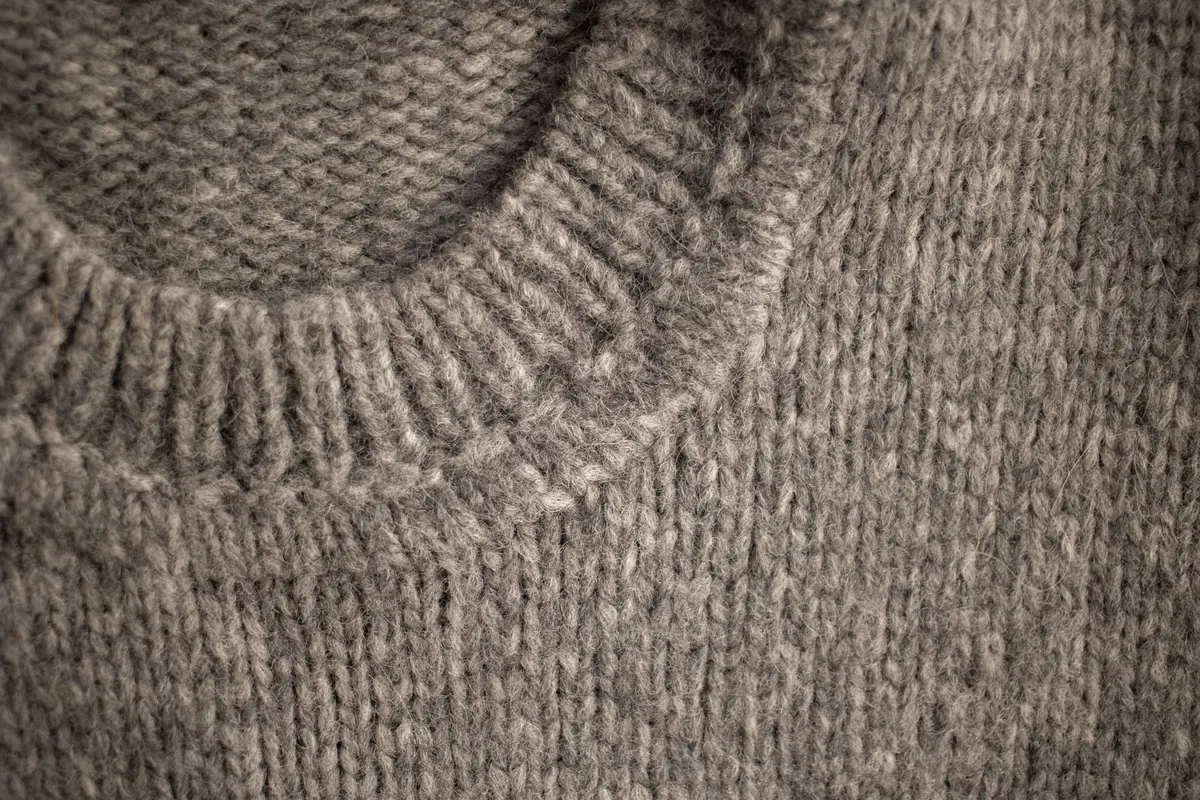
Two different things get called shrinkage. One is relaxation: the yarn simply springs back to a denser, tighter state after being stretched on the needles. The other is felting, and it is irreversible. A firm, thick, slightly fuzzy fabric where the stitch definition has blurred is a felted garment; there is no rescue, only repurposing. Superwash wool has been treated to resist felting, and a machine-washable label is worth trusting — but even superwash knits should be dried flat, because the machine can stretch them out of shape even when it doesn't shrink them.
Before the Water: Five Minutes of Prep
Set yourself up first, so you're not hunting for a towel with a soaking sweater in your arms. You'll want a clean basin or sink, a pH-neutral wool wash without enzymes, two or three bath towels, and a flat mesh drying rack. A salad spinner is genuinely useful for hats and mittens, and a soft measuring tape saves you from guessing later.
Then prepare the garment:
- Turn it inside out. The outside surface takes less abrasion, and pilling stays where you can't see it.
- Fasten buttons and close any zips so the placket doesn't stretch out of line.
- Secure loose yarn ends. Long tails can tangle and felt into hard little knots.
- Remove anything that dislikes water — leather patches, silk ribbons, beaded trim, pom-poms tied on with a bow.
- Test for color bleed: press a damp white cloth against a hidden spot and check whether dye transfers.
- Measure the chest width, body length and sleeve length, and write the numbers down. You'll use them while the sweater is damp.
Skip fabric softener entirely — it coats the fibers and dulls the stitch pattern — and skip anything with bleach or enzymes.
The Wash, Step by Step
- Fill the basin with cool or lukewarm water. Comfortably below body temperature is the safe zone. Use more water than you think you need; the garment should float rather than sit in a puddle.
- Add the wool wash and swish it through the water before the sweater goes in. Never pour concentrate directly onto wool.
- Lower the garment in with both hands, unfolding it as it goes. Don't drop it from a height and don't let it plop.
- Press it down gently until it's fully submerged, then leave it alone. No swishing, no kneading, no rubbing. This is the single habit that prevents most accidents.
- Soak for ten to fifteen minutes. Badly soiled pieces can stay for thirty. Don't leave wool soaking for hours out of habit.
- Lift the garment out with both hands underneath it, supporting the whole weight. Squeeze the water out slowly — never twist.
- Rinse in water of the same temperature, with a teaspoon of white vinegar if the soap seems slow to rinse away. Same rule as before: soak, press, no agitation.
- Squeeze once more and move straight to drying. Wool that sits wet in a heap creases, and creases set.
Keep the water temperature consistent from wash to rinse. A sudden shift from warm to cold can shock the fibers and leave wrinkles you'll struggle to press out.
Getting the Water Out Without Wringing
Lay a bath towel flat, put the sweater on it, and roll the whole thing up like a Swiss roll. Press down firmly along the roll, or kneel on it. The towel does the work. Repeat with a second dry towel if the first comes up soaked.
Never wring, twist or lift a wet sweater by the shoulders — wet wool is heavy, and gravity will do the stretching for you. If you want to speed things up, a very short, slow spin cycle inside a mesh laundry bag works for many knitters, but the drum must be balanced with towels and you should expect to reshape afterwards. When in doubt, skip it. Hats and mittens can go into a salad spinner lined with a towel, which pulls out a surprising amount of water in a few pulls.
Drying Flat Is Not Optional
Lay the garment on a mesh rack in a room with moving air, away from radiators, wood stoves and direct sun. While it's still damp, shape it back to your written measurements: square the shoulders, ease the sleeves to length, pat the ribbing flat rather than pulling it. Check again after a few hours, when the fabric begins to hold its shape.
Turn the piece over after a day, and expect a sweater to take two or three days to dry completely. Hanging is the one thing to avoid outright; the weight of the water will pull the shoulders into points and lengthen the body. A tumble dryer, even on low, is a gamble not worth taking with something you spent weeks knitting.
Hats, Mittens and Other Small Pieces
Small items follow the same rules in a smaller bowl. Wash them together if the colors are similar, then squeeze each one gently and roll it in a towel. Reshape mittens while damp with the thumb laid flat rather than curled under, and smooth the cuffs so the ribbing dries at its natural width.
For a hat, dry it over an inverted bowl or a plate to hold the crown open, but don't stretch the brim over anything wider than it already is — that's how ribbing ends up slouchy. If a pom-pom is stitched on, pat it into shape with your fingers; if it's tied on with a bow, take it off and wash it separately in a mesh bag.
Between Washes: Stains, Smells and Storage
Wool doesn't need frequent washing. Air a sweater for a day after wearing it, and give it a day of rest between outings. Treat spots promptly: blot with cool water and a trace of wool wash, working from the outside of the stain inward, and never rub — rubbing is felting in miniature. For greasy marks, a tiny amount of pH-neutral wash and patience beats scrubbing.
To refresh a garment that smells of cooking or smoke, hang it in moving air or hold a steam iron a few centimetres above the surface. Never press a hot iron directly onto wool, and never iron ribbing, which flattens permanently. Store clean knits folded, never on a hanger for months at a time, with cedar or lavender nearby.
A Routine Worth Keeping
Wash less often, wash cooler, and handle less. Those three habits cover nearly every disaster a hand-knit can meet. Keep a wool wash by the sink, a mesh rack behind the door and your measurements in a notebook, and the next washday becomes what it should be: an unremarkable half hour, followed by a sweater that still fits exactly as it did before.
Photo: Monstera Production / Pexels