

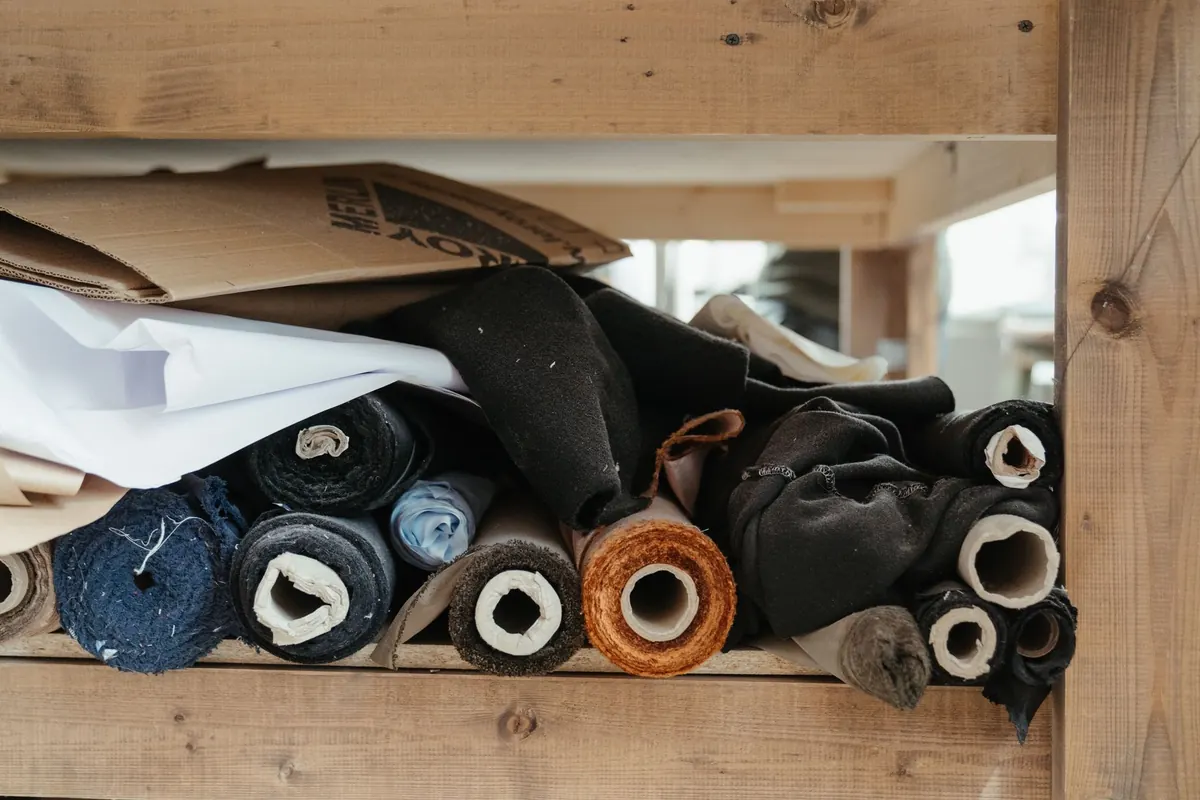
The bolt lands on the counter with a soft thud. The shopkeeper unrolls a metre, steps back, and holds the cloth up so you can see the colour in daylight rather than under the shop lights. Italian linen is still sold like this in dozens of places: in small weaving outlets, at Tuesday market stalls, in back rooms where the shelves are labelled by weight instead of by name. It is one of the real pleasures of sewing here — and it is also where good summer garments quietly go wrong, because linen bought on feel alone has a way of shrinking, twisting and fraying after the first wash. Here is the check worth running before the scissors come out.
Read the bolt, not just the colour
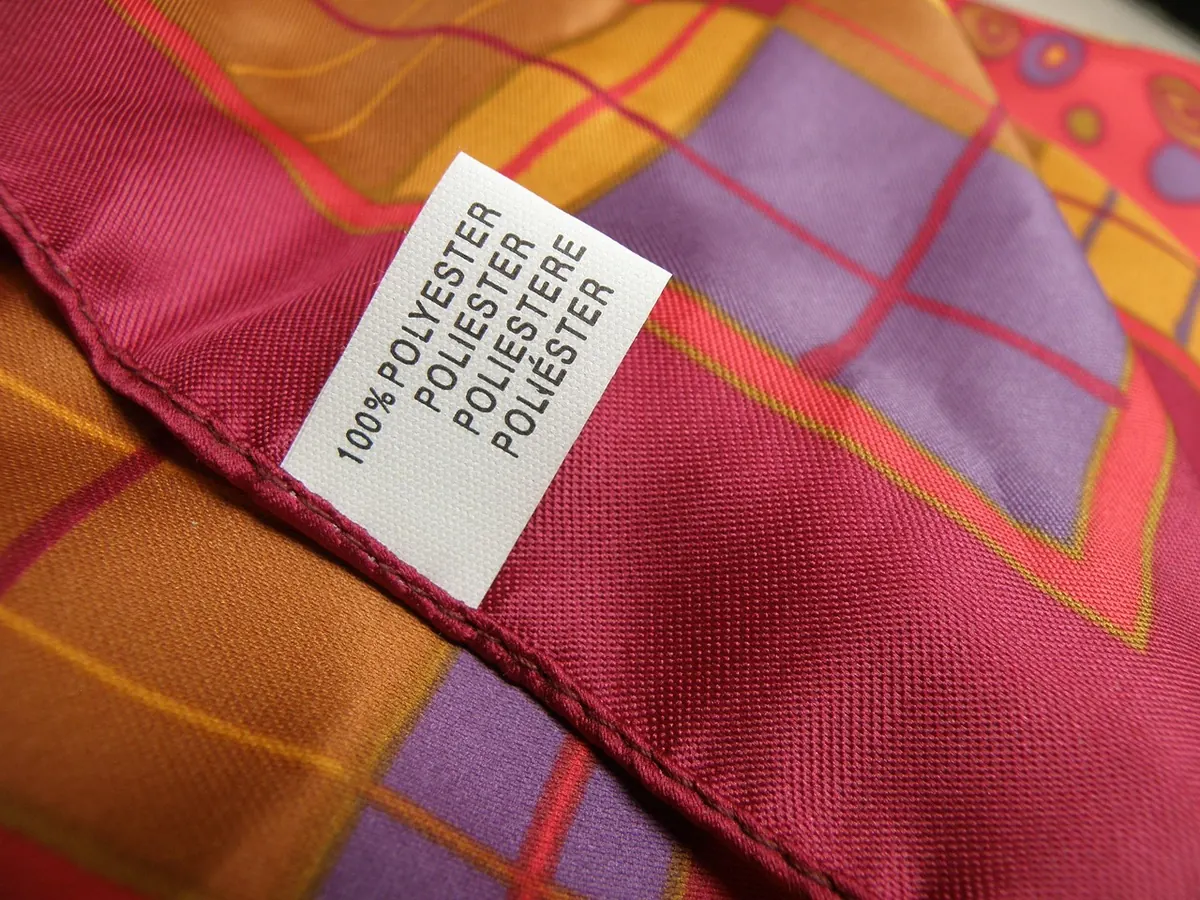
Start with the composition, which in Italy is usually written on the bolt end as well as on the shelf card. Pure linen, lino 100%, gives you the crisp hand and the dry, cool touch that made you pick it up. Blends are not a compromise so much as a different fabric: a little viscose softens the drape and makes linen behave better in wide trousers, while cotton-linen is more stable to sew and easier on the budget. Neither is wrong. What matters is knowing which one is in your hands before you plan a garment around it.
Then look for the finishing words. Lino lavato means the fabric has been washed at the mill and has already relaxed, so it will shrink less — though "less" is not "not at all." Lino garzato is brushed on one side, softer and warmer, better for a shirt you will wear into September than for a July dress.
Check the weight in grams per square metre if the shop lists it. Lightweight linens in the region of 130–170 g/m² suit blouses, shirts and gathered dresses; 180–220 g/m² holds a crease and works for trousers, shift dresses and simple jackets. Above that you are into canvas territory, which is wonderful for bags and structured pieces and miserable for anything that needs to move.
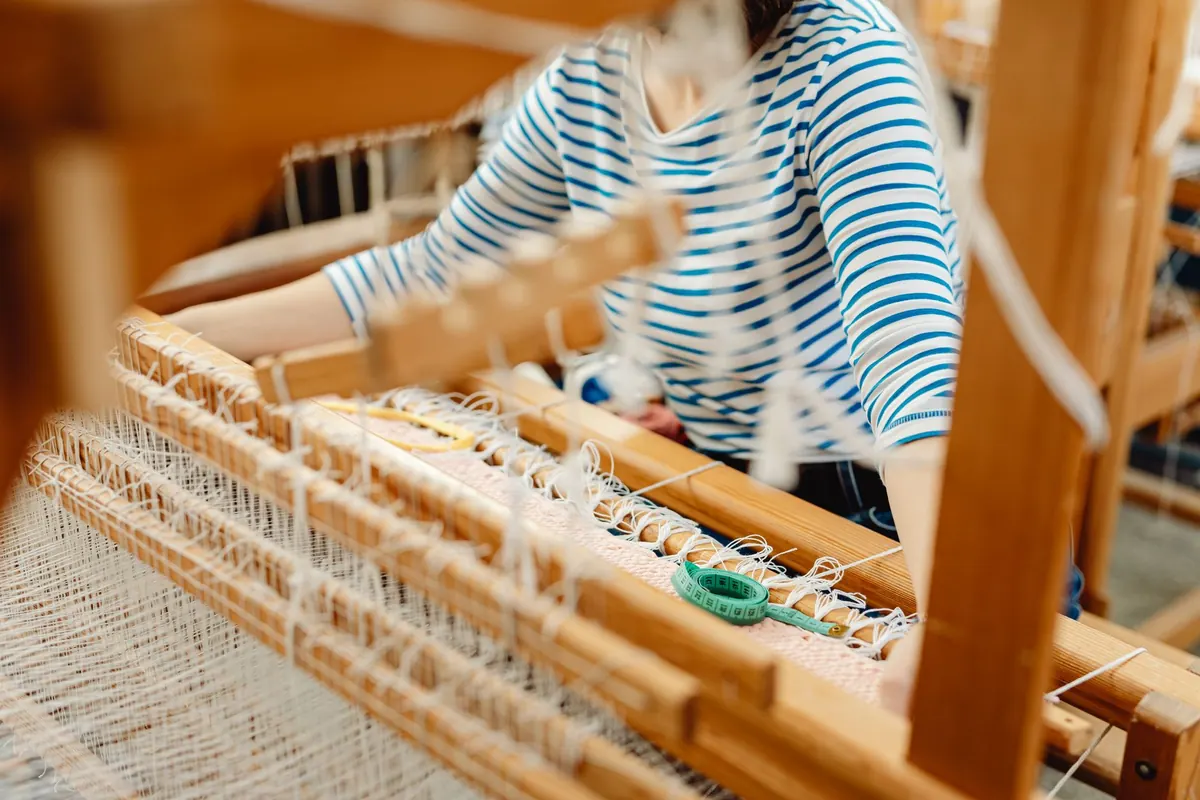
Finally, measure the width. Many Italian linens come at 140–150 cm, but narrow traditional looms still produce cloth at 90–110 cm. On a 90 cm bolt, a pair of wide-leg trousers may not fit the layout at all, and that changes both your cutting plan and how much you need to buy.
Check the weave and the grain
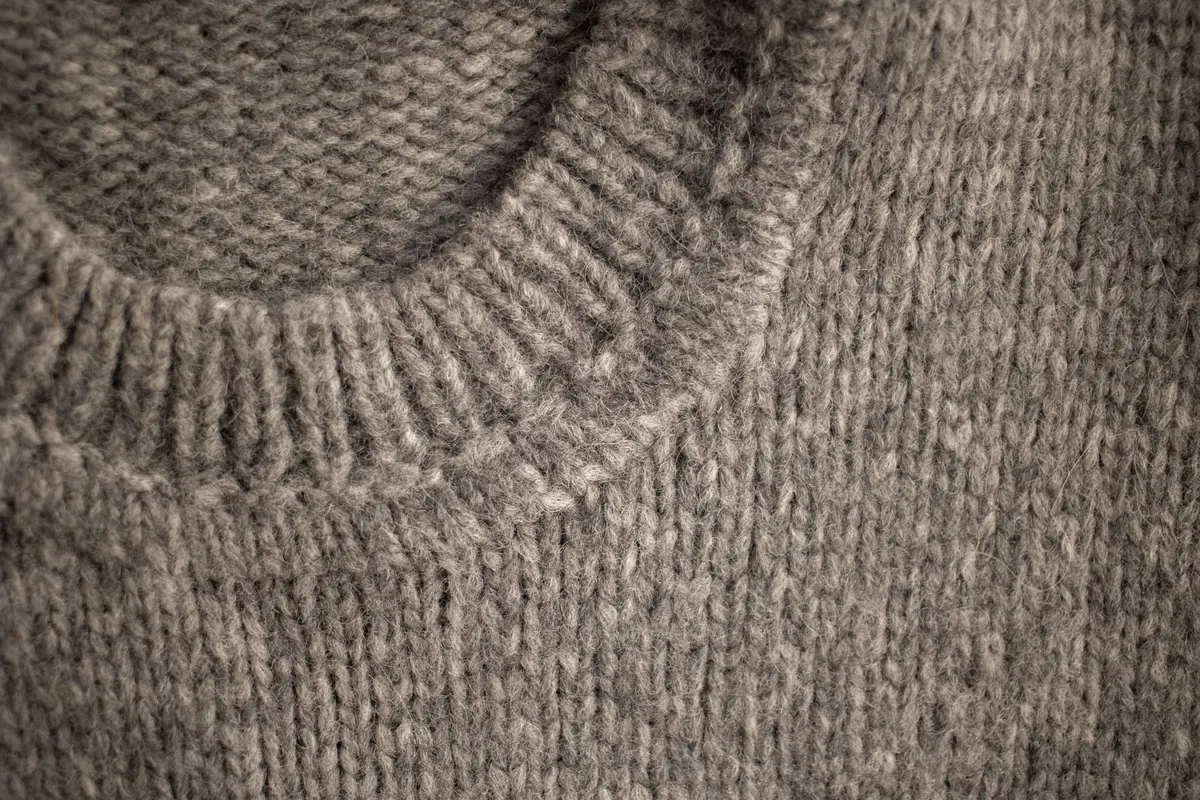
Hold the cloth up to the light. A plain weave is the classic linen surface; a basket weave looks chunkier and more rustic; a herringbone or fine twill is denser and far less prone to creasing. Open gauzes and double-gauzes are beautiful for loose summer layers but fray with enthusiasm, so plan for generous seam allowances.
Slubs — the small thick-and-thin nodes in the yarn — are part of the character of linen, not a defect. But give one a gentle tug. If it slides along the weave, the cloth is loosely set and will wear through at stressed seams. If it holds, you are fine.
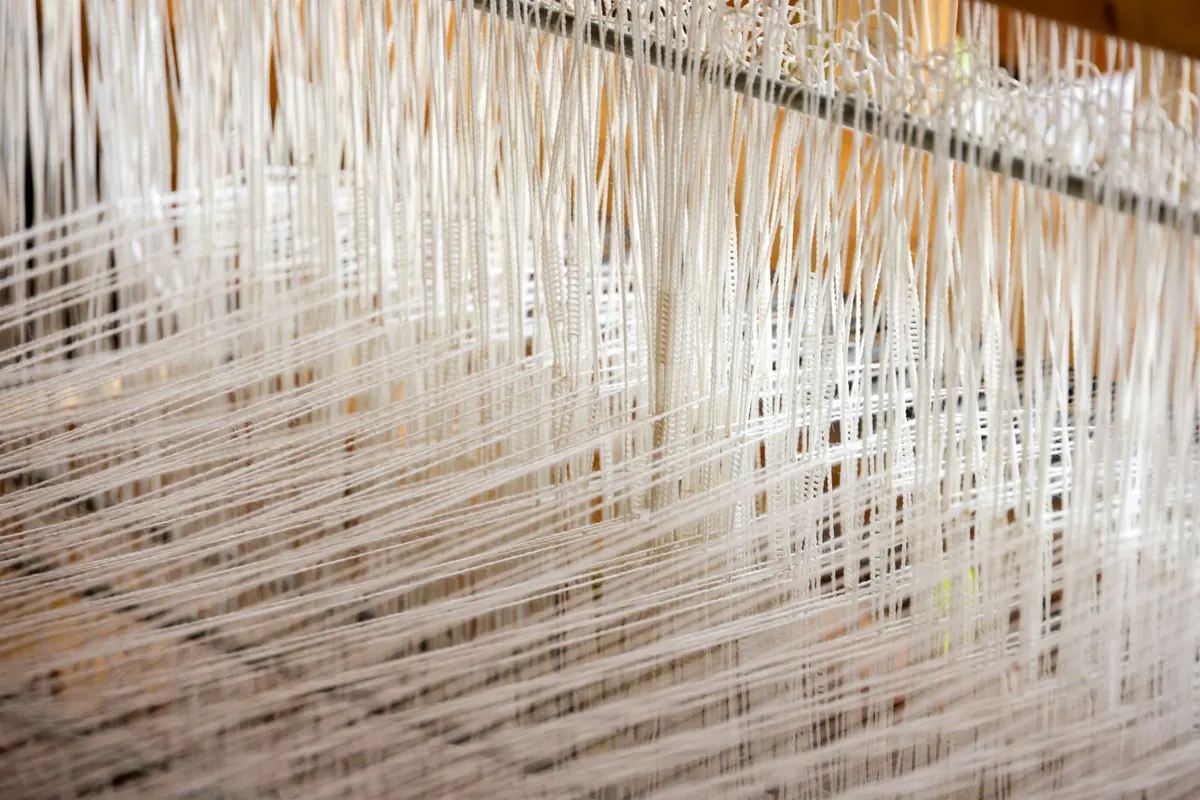
Grain is the check people skip and later regret. Pull a single weft thread across the width and see whether it runs straight or curves. Fold the fabric lengthwise with the selvedges together and let it hang: if the cut end swings away in a spiral, the cloth is skewed and will twist through the wash. No amount of careful pressing cures a badly skewed weave.
Run a shrink test before you trust the length
Linen shrinks, and it often shrinks more in the weft than in the warp. The only test that means anything is the one you do yourself, on your fabric, with your washing machine.
- Cut a square roughly 30 × 30 cm and mark a 20 × 20 cm box inside it with a fabric pen or a line of basting thread.
- Finish or serge the raw edges so the sample does not unravel in the drum.
- Wash it exactly as you intend to wash the finished garment — same temperature, same detergent, same spin.
- Dry it the way you will dry the garment. Line drying and tumble drying give different results, and linen is sensitive to both.
- Press it while still slightly damp, then measure the marked box again.
Repeat once for anything with a loose or open weave; linen frequently moves in stages rather than all at once. Write the percentage down and add it to your pattern before you cut, not after. While the sample is in the wash, rub a corner on a white cloth to check for colour bleed — deep indigo and saturated rust linens can release dye for the first few washes.
Buy accordingly. On a dress length, an extra 20–30 cm is cheap insurance, and it also leaves room for a cutting mistake or a change of mind about the hem.
Choose seam finishes that expect to be washed
Linen frays quickly and does not forgive unfinished edges, especially in a garment that will be washed weekly and worn in the heat. Decide on the finish before you sew the first seam, because it affects your seam allowances.
- French seams for lightweight shirting and blouses: neat, strong, and no raw edge in sight. Allow 1.5 cm total and trim the first pass down to about 5 mm.
- Flat-felled seams for trousers, shirt backs and anything under strain. They look intentional on a rustic cloth and get softer with every wash.
- Overlock plus binding for heavier linens and jackets, where a bulky French seam would stiffen a curve.
- Bias-bound armholes and necklines in a fine voile or a cotton lawn, rather than facings that show through a light-coloured weave.
Use a slightly longer stitch than you would on cotton, around 2.5–3 mm, and finish thread tails properly rather than backstitching into a spot where bulk will show.
Needles, thread and tension
A sharp or Microtex needle in size 80/12 handles most shirt-weight linen; go to 90/14 for canvas and heavier twills. Cotton or cotton-wrapped polyester thread suits linen better than a pure synthetic, which can saw through the fibres over time. Loosen the tension a touch and sew a test seam on a doubled scrap — linen has almost no stretch, so a tight stitch puckers the surface and leaves a line you cannot press out.
Press as you go, with steam, and let the fabric cool flat before moving it. Linen takes a sharp crease beautifully and equally takes a shine if you bear down with a hot iron on the right side; press from the wrong side or through a cloth.
Buying at the source: what to ask
In an Italian shop or market, a few direct questions save a lot of guessing. Ask “È lavato?” to find out whether the cloth has been pre-washed. Ask “Che altezza ha?” for the width. Ask “Si restringe?” and watch the answer — a hesitant one is information too. A good seller will cut you a small ritaglio to take home and wash, and will let you match thread from the same shelf.
Treat “Made in Italy” as a starting point rather than a guarantee of performance: plenty of excellent cloth is woven here from imported yarn, and plenty of mediocre cloth carries the label. Judge the weave, the grain and the hand in front of you.
The night before you cut
Wash the whole length the way you washed your sample, dry it flat or on a line, and press it while damp. Lay it out, check that the cut ends are square, and straighten them by pulling a weft thread if they are not. Match any stripes or checks before you pin, and cut with the grain, not with the selvedge, if the two disagree. Ten minutes of preparation here is the difference between a linen dress you wear for a decade and one that hangs crooked by August.
Photo: cottonbro studio / Pexels